Portolà Expedition: The 1769 Naming of the San Lorenzo River
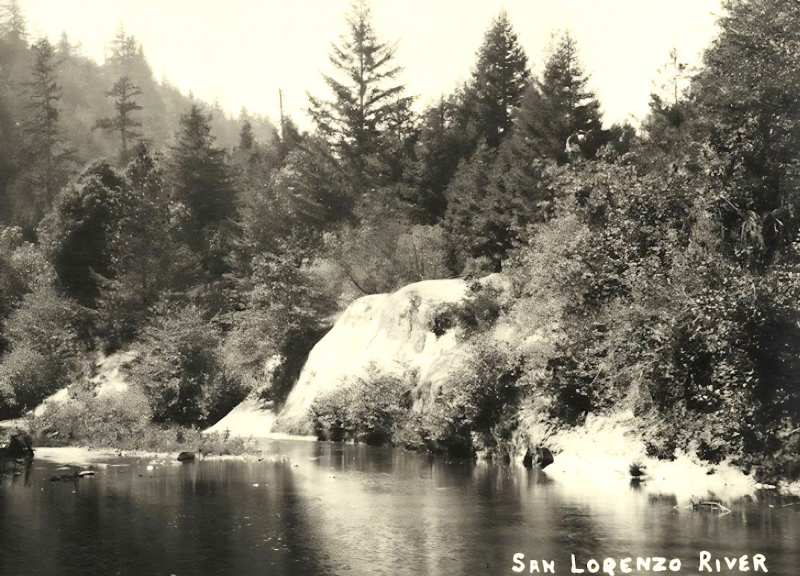
On a chilly, fog-draped evening in October 1769, a group of Spanish explorers set up camp along the west bank of a river near towering redwoods. Led by Captain Gaspar de Portolà, this adventurous group — California’s first European overland expedition — had found a waterway so impressive they named it “Río de San Lorenzo” on October 17, after their patron saint Saint Lawrence.
Portolà’s party, about 60 strong with soldiers, priests, and native guides, had been slogging north from San Diego, hunting for Monterey Bay to stake Spain’s claim to Alta California. By mid-October, they were low on rations, footsore, yet stunned by the massive redwoods. Father Juan Crespí, the expedition’s chronicler, recorded detailed observations of the region’s plants, animals, and terrain in his diary. He noted that the surrounding landscape was rich and well-watered, offering the travelers a welcome and hospitable campsite. Translations of Crespí’s journals are available at the San Lorenzo Valley Museum in Boulder Creek.
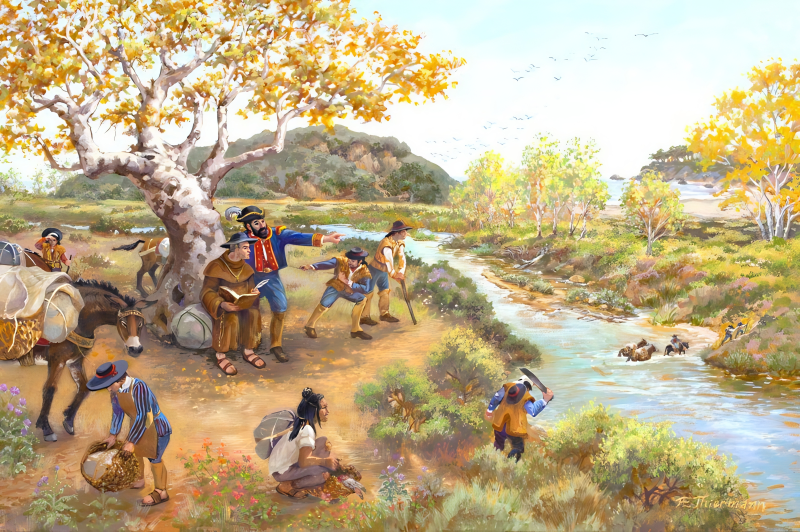
Portola crossing the San Lorenzo River. Painting by Ann Thiermann from the cover of Melanie Mayer’s book The Mission Santa Cruz Mystery, Seven Clues to Find the Site of the First Mission.
They weren’t alone in this place. The Awaswas Ohlone had called the river home for thousands of years, gliding along in tule boats and gathering acorns under the same redwood canopy. Portolà’s group didn’t record meeting Ohlone here, but nearby in Santa Cruz, they noted exchanges — Ohlone offering seeds, Spaniards trading beads.
To the Ohlone, the river was sacred, a source of life. But the Spanish placed their own label on it, tying it to a far-off saint and colonial ambitions. That name, San Lorenzo River, stuck, appear- ing on Spanish maps and drawing missionaries, rancheros, and later, American settlers. By the 1800s, the river’s banks saw Mexico’s Rancho Zayante land grant, then logging camps and towns like Felton, named for a politician, and Ben Lomond, with its Scottish name worlds away from the words of the Ohlone. The river shaped the valley, its floods carving the land and testing folks’ resolve — think 1982’s mudslides or the 2023 storms locals still talk about on social media.
Today, conservationists keep an eye on salmon runs, a nod to the steelhead that kept Portolà’s crew going. Trails along the water invite walks under October’s canopy, linking us to those old days. The San Lorenzo Valley Museum, with its maps, images, and author Alan Brown’s translation of Crespí’s journals, brings that history to life.
Next time you’re by the river, think about its past. Got a story or photos about its floods, fish, or foggy mornings? Share it with the SLV Post or the San Lorenzo Valley Museum.

The San Lorenzo Valley Post is your essential guide to life in the Santa Cruz Mountains. We're dedicated to delivering the latest news, events, and stories that matter to our community. From local government to schools, from environmental issues to the arts, we're committed to providing comprehensive and unbiased coverage. We believe in the power of community journalism and strive to be a platform for diverse voices.